guide
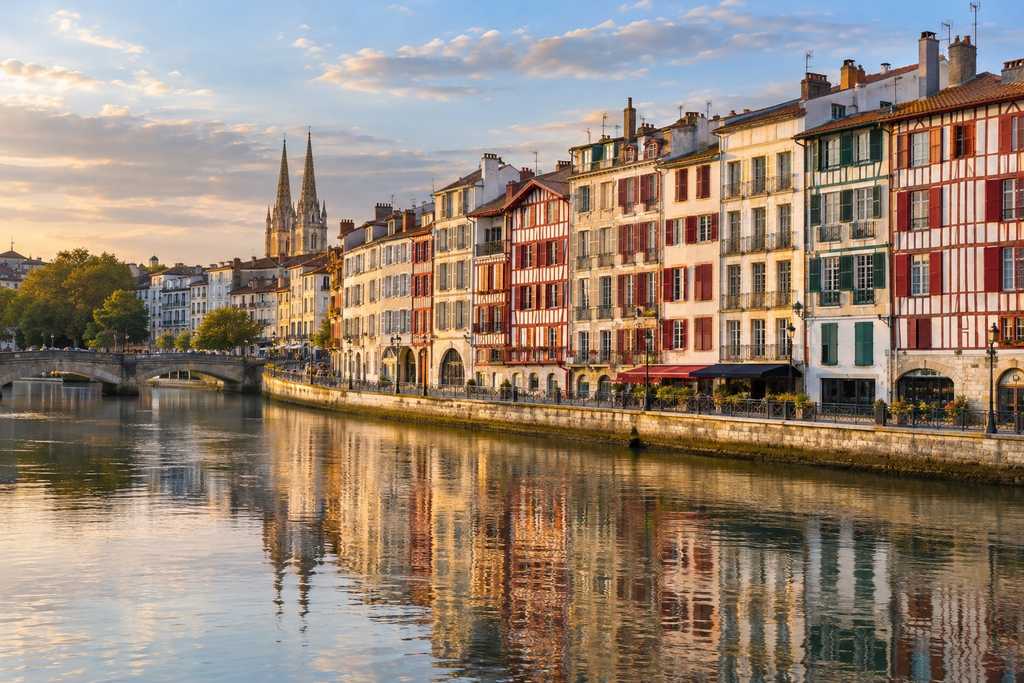
This article gathers our ideas for visiting Bayonne in one or two days: Sainte-Marie Cathedral and its cloister, the ramparts, Petit Bayonne and its museums, the chocolatiers of rue du Port-Neuf, the Halles, the Ham Fair and the Fêtes de Bayonne. Many of these visits are free, and the nearby Basque coast offers good campsites for smart, affordable stays.
What is there to do in Bayonne when you only have a day or a weekend? The capital of the inland Basque Country is best explored on foot, between the Gothic cathedral of Grand Bayonne, the colourful quays of the Nive and the alleys of Petit Bayonne. Many of its finest spots are free or almost, which makes it an ideal stop during a stay at a campsite on the Basque coast.
Here are our visit ideas, the highlights not to miss and the tips for enjoying the town without blowing the budget.
| Information | In brief |
|---|---|
| Must-see | Sainte-Marie Cathedral, cloister, Nive quays, Petit Bayonne |
| Free visits | Cathedral cloister, ramparts, Musée Basque on the first Sunday of the month |
| Specialities | Chocolate, Bayonne ham, gâteau basque |
| Highlights | Foire au jambon in spring, Fêtes de Bayonne in July |
| Getting around | On foot in the centre, Tram’bus T1 to Anglet and Biarritz |
| Suggested duration | One day for the town, two for the museums |
The visit almost always starts with the Sainte-Marie Cathedral, whose two spires dominate the town. A stop on the Way of St James to Santiago de Compostela, it is part of the UNESCO World Heritage listed site. Next to it, the Gothic cloister, free entry at 15 rue des Prébendés, offers a quiet break away from the busy shopping streets.
Heading down towards the Nive, the streets of Grand Bayonne line up their half-timbered houses, arcades and old shops. Take the time to walk along the ramparts: the fortifications, reworked by Vauban, can be walked freely and form a green promenade around the old town.
Across the Nive, Petit Bayonne is the district of bars, pelota trinquets and museums. The Musée Basque et de l’histoire de Bayonne is the best introduction to Basque culture: costumes, furniture, pelota, maritime history. Good to know, entry is free for everyone on the first Sunday of the month and for under-26s.
Just next door, the Musée Bonnat-Helleu reopened its doors on 27 November 2025, after more than fourteen years closed and works that doubled its floor space. Its fine arts collections, enriched by an important cabinet of drawings, make it one of the richest museums in the south-west.
Bayonne claims the title of France’s first chocolate-making town. The know-how arrived in the 17th century with the Sephardic Jewish families settled in the Saint-Esprit district, and by the mid-19th century the town had more than thirty factories. Today, rue du Port-Neuf is home to the historic chocolatiers, including the Cazenave house, founded in 1854 and famous for its frothy chocolate.
For the rest, head to the Halles, on the banks of the Nive: Bayonne ham, sheep’s cheese, Espelette pepper and gâteau basque can be bought at fair prices. Enough to put together a picnic for the evening, at the campsite or on the quays.
Two events set Bayonne’s calendar. The Ham Fair (Foire au jambon), a tradition recorded since 1462, takes place in spring: in 2026 it ran from 23 to 26 April, with free entry. The Fêtes de Bayonne last five days and five nights in July (15 to 19 July in 2026) and draw hundreds of thousands of festayres dressed in white and red.
The 2027 dates have not been published yet: they are announced by the town hall, usually in autumn for the Ham Fair and in spring for the Fêtes. During the Fêtes, accommodation around the town fills up very quickly, campsites included.
Bayonne is one of those towns where you can fill a day without opening your wallet. Our favourite ideas:
Bayonne is served by the A63 and A64 motorways, by the SNCF station and by Biarritz airport, just a few minutes away. Once there, leave the car: many car parks on the edge of town are linked to the centre by a free shuttle. The Chronoplus network adds two Tram’bus lines: the T1 links Bayonne, Anglet and Biarritz, the T2 goes as far as Tarnos. Handy for combining a visit to the town with an end-of-afternoon at the beach.
Spring and early autumn are the best seasons: the town is lively without being crowded, and campsite rates are gentler than in high summer. July is the season of the Fêtes, ideal for the atmosphere but to be booked well in advance. In winter the town lives at its own pace, with its museums and chocolatiers, but most campsites on the coast are closed.
Our selection lists 7 verified campsites around Bayonne, with an average rating of 3.9/5. To combine the town and the beach, the Basque coast offers good options less than half an hour away by car.
In Bidart, about ten kilometres to the south, the Camping Ur-Onea, 3 stars, and the Camping Sea Green Erreka make it quick to reach Bayonne and Biarritz. Further south, in Urrugne, the Camping Suhiberry, 4 stars, puts the Spanish border and Saint-Jean-de-Luz within easy reach. Find all the addresses on our page of cheap campsites in the Basque Country.
Bayonne deserves far more than a quick pass between two beach days. Its old town can be discovered for free, its museums are among the finest in the region and its specialities can be enjoyed without ruining you. Allow a full day, two if you like museums, and extend your visit with our ideas to discover the Basque Country and its most beautiful villages.
Sainte-Marie Cathedral and its cloister, the streets of Grand Bayonne, the Nive quays, then Petit Bayonne and the Musée Basque. Finish on rue du Port-Neuf with a hot chocolate.
The cathedral cloister, the walk along the ramparts, the quays and the Ham Fair are free. The Musée Basque is also free on the first Sunday of the month and for under-26s.
They last five days in July: 15 to 19 July 2026. The 2027 dates will be published by Bayonne town hall.
Yes. Closed since 2011, it reopened on 27 November 2025 after a full renovation and extension.
The centre is walkable. A free shuttle links the outer car parks to the centre, and the Tram’bus T1 serves Anglet and Biarritz.
Bidart and Urrugne, on the Basque coast, are less than half an hour away by car. Our Bayonne page lists 7 verified campsites in the area.
Campsites marked “Partner” are Aimer Camper members and are shown first. All results match your search.