Blog
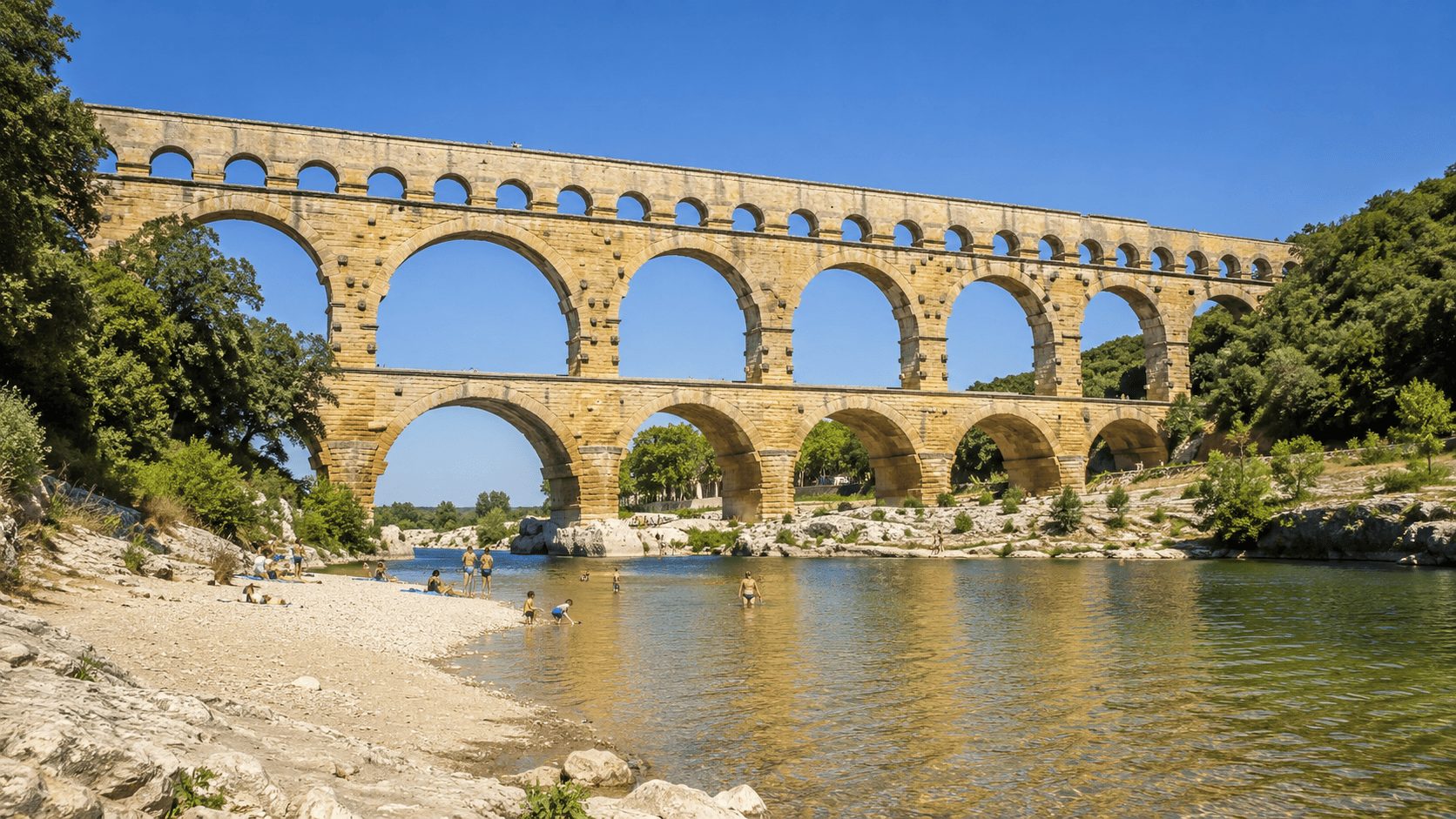
Visiting the Pont du Gard starts with good news: access to the site is free of charge, only parking and guided tours cost money. This 49-metre-high Roman masterpiece can be explored on foot, with the family, between swimming in the Gardon and visiting the museum.
From a cheap campsite, you can enjoy the monument without straining your holiday budget.
| Information | In brief |
|---|---|
| Site access | Free of charge all year round |
| Opening hours | Open every day, from 8am to midnight in summer |
| Museum | From €8 per adult, free for under-18s |
| Parking | From €9 per car per day |
| Monument | 49 m high, with 3 tiers of arches |
The Pont du Gard is a Roman aqueduct bridge built in the 1st century to carry water to the town of Nîmes. It’s the best-preserved section of a nearly 50 km aqueduct that started at the source of the Eure, near Uzès. With its three superimposed tiers of arches and its 49-metre height, it remains the tallest surviving Roman aqueduct bridge in the world.
The builders assembled stone blocks weighing up to 6 tonnes, without mortar and with remarkable precision. This feat of engineering earned it a place on the UNESCO World Heritage list in 1985. Spanning the Gardon river, the monument illustrates Rome’s hydraulic expertise, still visible in every arch.
The Pont du Gard is not just its bridge: the site offers a full day of activities, from the museum to swimming. This remnant of the Roman aqueduct that once supplied Nîmes can be admired from both banks, linked by a shaded path. To help you plan your visit, here are the highlights:
Families with children also enjoy the Ludo area, a playful trail for 5 to 12 year olds to discover life in Roman times.
Before you set off, a few practical details will make organising your visit easier:
Staying at a nearby campsite remains the most affordable way to visit the Pont du Gard at your own pace. The Gard region has plenty of accessible sites, often eligible for VACAF grants, which lowers the bill even further. To make the most of the site without stress or unnecessary spending, keep these tips in mind:
A little extra: in summer, an evening show lights up the bridge’s arches after nightfall. It’s a magical moment, visible from around the site, best enjoyed after a day of swimming. Remember to bring something warm, as evenings by the Gardon cool down quickly once the sun sets!
You now have all the information you need to visit the Pont du Gard and make the most of its free access. Why not extend the discovery by staying nearby, without inflating your budget? Compare cheap campsites in the Gard and book your Roman getaway with total peace of mind!
Yes, access to the Pont du Gard site is free of charge all year round. Only parking, from €9 per car, and guided tours or museum entry remain chargeable. You can therefore admire the Roman aqueduct and stroll along its banks without spending a cent.
The Pont du Gard’s opening hours run from 8am to midnight every day during the summer season. The museum and discovery areas close earlier and adjust their hours off-season. For a full visit including the museum, arrive in the morning or early afternoon.
Yes, swimming is allowed at the Pont du Gard, at the developed natural beach by the Gardon. It’s a very popular activity with families in summer, provided you keep an eye on children, as the river isn’t supervised everywhere. Remember to bring water shoes and towels.
To visit the Pont du Gard, allow half a day if you combine the bridge, the museum and a swimming break. A full day lets you add the 3.5 km Aqueduct trail and a picnic by the river. Families enjoy taking their time at this site.